Properties and Future Applications of Aluminum Oxynitride Ceramic
Executive Summary
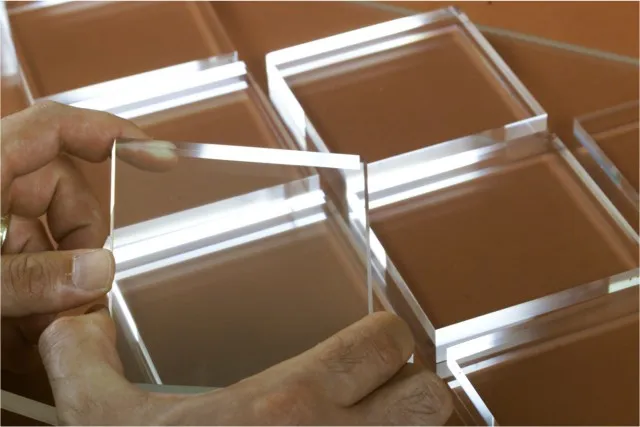
Aluminum oxynitride (ALON) is a transparent polycrystalline ceramic material that combines broad-spectrum optical transmission with high hardness, mechanical strength, and thermal stability.1 Originally developed for military and aerospace applications, ALON has become one of the most advanced transparent ceramics currently in commercial production. Its cubic spinel crystal structure enables isotropic optical and mechanical behavior, allowing fabrication of large transparent structures that are difficult or impractical to produce using single-crystal sapphire.2
ALON transmits light from the ultraviolet through portions of the mid-infrared spectrum while maintaining hardness approaching sapphire and greatly exceeding conventional glass.3 The material has a density of approximately 3.68 g/cm³, Young's modulus near 320 GPa, Knoop hardness around 1800–1850 kg/mm², and flexural strength typically between 300–700 MPa depending on processing conditions.1
These properties make ALON valuable for transparent armor, sensor windows, missile domes, high-temperature optical systems, and future aerospace infrastructure. Compared with the glass and sapphire currently used in many of these systems, ALON offers an unusually advantageous and unique combination of optical performance, durability, thermal resilience, and manufacturability.
Despite its advantages, ALON remains presently limited by manufacturing complexity, high cost, and restricted global supply. Surmet Corporation is currently the sole major commercial producer of ALON transparent ceramics.5 Future advances in powder synthesis, sintering, and scalable manufacturing will determine whether ALON remains primarily a defense material or expands into broader industrial and consumer applications.
Background & Context
Transparent aluminum oxynitride ceramics emerged from research into the aluminum oxide–aluminum nitride phase system during the 1970s.6 Researchers discovered that introducing nitrogen into alumina stabilized a cubic spinel-like crystal phase capable of optical transparency when processed to near-full density. This led to the development of ALON compositions approximating Al₂₃O₂₇N₅.6
Early development was closely tied to military demand for transparent armor and durable multispectral optical windows.7 Traditional materials such as silicate glass and fused silica offered strong optical performance but lacked sufficient hardness and ballistic resistance for demanding operational environments. Sapphire provided much greater durability, though its anisotropic crystal structure and difficult crystal-growth process imposed major cost and size limitations.8
ALON addressed several of these limitations simultaneously. Unlike sapphire, it can be fabricated through powder-metallurgy processes that enable near-net shaping and larger optical components.2 Because the material is cubic and isotropic, it avoids many of the birefringence and machining challenges associated with single-crystal sapphire.9
Commercialization accelerated during the late 1990s and early 2000s as demand for lightweight transparent armor increased. Raytheon and later Surmet Corporation played major roles in advancing ALON into commercially viable transparent ceramic systems.10 By the early 2000s, ALON armor systems demonstrated substantial weight reductions relative to conventional ballistic glass while maintaining similar or superior protection.7
Today, ALON is primarily used in missile seeker domes, infrared windows, transparent armor, airborne optical systems, and specialized industrial optics.5
The material is often referred to in popular media as “transparent aluminum,” though this is scientifically inaccurate and a common misconception, as ALON is not metallic aluminum, but a ceramic aluminum oxynitride compound with a fundamentally different crystalline structure.11
Technical Analysis
Crystal Structure and Composition
ALON is a cubic spinel-type ceramic generally described by the compositional system (Al₂O₃)₁₋ₓ(AlN)ₓ.6 The incorporation of nitrogen stabilizes the crystal lattice into a transparent cubic phase with isotropic optical and mechanical properties. Commercial ALON compositions typically contain around 30–37 mol% aluminum nitride.10
Its isotropic crystal structure is one of its major technical advantages. In anisotropic materials such as sapphire, optical behavior varies with orientation, increasing the complexity of polishing, machining, and system integration. ALON's cubic symmetry avoids these issues and enables more uniform behavior across large surfaces.9
Optical Properties
ALON demonstrates strong transmission from the ultraviolet through the visible spectrum and into portions of the mid-wave infrared region.3 Polished samples around 2 mm thick typically exceed 80% transmission across approximately 0.2–5.0 μm.3
Its refractive index is approximately 1.79–1.80 in visible wavelengths and gradually decreases at longer infrared wavelengths.3 Dispersion characteristics are suitable for imaging systems, infrared sensors, and multispectral apertures.
Unlike many ceramics, fully densified ALON can achieve very low optical scattering because residual porosity and grain-boundary scattering are minimized through high-temperature densification and hot isostatic pressing.10
ALON is also radio-frequency transparent, enabling combined optical, infrared, and RF functionality within a single structural aperture.2
Mechanical Performance
ALON possesses extremely high hardness compared with conventional transparent materials. Knoop hardness values generally range from approximately 1800–1850 kg/mm², approaching sapphire and greatly exceeding hardened glass.1
Young's modulus is approximately 320 GPa, and fracture toughness typically ranges between 2.0–2.4 MPa·m^½.1 Flexural strength commonly falls between 300–700 MPa depending on processing quality and geometry.1
Transparent armor systems incorporating ALON have demonstrated equivalent ballistic protection to traditional glass systems at significantly lower areal densities.7
Thermal and Environmental Stability
Thermal conductivity values for ALON generally range from approximately 20–25 W/m·K, exceeding many traditional optical glasses.1 Thermal expansion coefficients are typically around 5–7×10^-6/°C.1
ALON maintains structural and optical integrity at temperatures far exceeding those tolerated by most glasses and polymers. This enables use in high-speed aerospace systems, missile domes, combustion diagnostics, and industrial furnace environments.3
Chemically, ALON is resistant to most environmental degradation mechanisms and demonstrates strong resistance to acids, alkalis, and moisture exposure under normal operating conditions.2
The material also demonstrates favorable radiation resistance compared with conventional silicate glasses, an important property for long-duration spacecraft applications.4
Manufacturing and Processing
ALON is produced using advanced ceramic powder-processing techniques.10 High-purity alumina and aluminum nitride powders are blended or reactively processed, shaped into green bodies, and densified through high-temperature sintering followed by hot isostatic pressing.
Achieving full transparency requires elimination of microscopic porosity and inclusions that scatter light. As a result, manufacturing demands extremely precise powder purity, thermal control, and atmospheric management.10
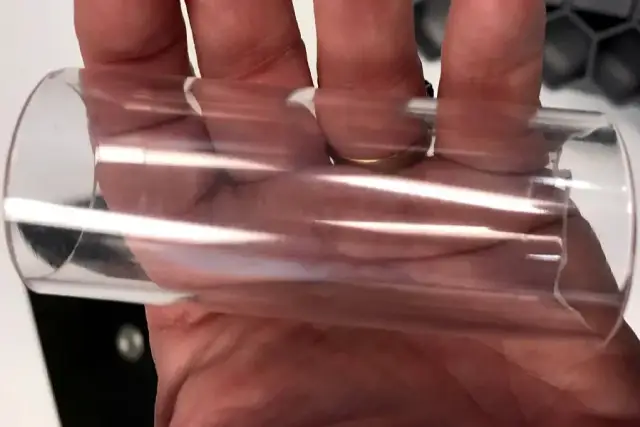
Unlike sapphire, which requires expensive crystal-growth processes, ALON can be formed into complex geometries before densification. This near-net-shape capability enables production of domes, curved windows, and other complex optical structures with reduced machining requirements.2
However, finishing operations remain difficult and expensive because of the material's extreme hardness. Precision grinding and polishing are required to achieve optical-grade surfaces.
Comparative Evaluation
ALON occupies a distinct position among transparent structural materials.
Compared with sapphire, ALON offers slightly lower hardness and flexural strength but significantly better manufacturability for large or complex geometries.8 Sapphire remains one of the hardest transparent materials available, though its single-crystal nature imposes substantial cost and size limitations.
Compared with magnesium aluminate spinel, ALON generally provides superior hardness and ballistic resistance.2 Spinel has somewhat lower density and strong optical performance but usually lower mechanical strength.
Relative to fused silica and conventional silicate glasses, ALON demonstrates dramatically better abrasion resistance, impact resistance, and structural durability.4 Fused silica retains advantages in thermal shock resistance and cost but lacks the robustness required for high-impact environments.
Infrared materials such as zinc sulfide provide broader IR transmission but have significantly lower hardness and environmental durability.8
The primary limitation across all comparisons remains cost. ALON production is expensive relative to most transparent materials because of processing complexity and limited manufacturing scale.5
Strategic Implications and Future Applications
Spacecraft and Spaceflight Systems
ALON may ultimately become one of the most strategically valuable transparent materials for long-duration human spaceflight, advanced spacecraft infrastructure, and beyond. Modern spacecraft windows rely heavily on multilayer silica-based assemblies that prioritize pressure containment and redundancy but carry significant mass penalties.4 While conventional fused silica windows perform adequately in current orbital systems, they remain vulnerable to scratching, particulate erosion, and micrometeoroid damage over long operational lifetimes.
ALON's hardness and abrasion resistance provide substantially greater resistance to orbital particulate impacts and surface degradation compared with conventional glass systems. In space environments, even microscopic particles traveling at orbital velocities can gradually damage exposed optical surfaces, reducing visibility and increasing maintenance requirements.
This becomes increasingly important for future spacecraft expected to operate for years or decades in deep-space environments. Lunar and Martian infrastructure will likely require transparent materials capable of surviving thermal cycling, radiation exposure, abrasive dust interaction, and micrometeoroid impacts while maintaining optical clarity and structural integrity.
Future orbital stations and deep-space habitats may also incorporate larger transparent viewing areas than current spacecraft. Compared with conventional multilayer glass systems, ALON-based structures could potentially reduce total window mass while improving survivability.
This is especially relevant for Mars missions. Martian dust is highly abrasive and electrostatically active, gradually degrading exposed surfaces. Conventional glass systems would experience long-term scratching and erosion, whereas ALON's substantially greater hardness could improve operational longevity for habitat windows, rover optics, helmet visors, and external sensor systems.
Because the material is radio-frequency transparent while simultaneously transmitting visible and infrared wavelengths, future spacecraft may also integrate antennas, infrared systems, optical sensors, and structural windows into unified transparent apertures.2
Reusable spacecraft and hypersonic atmospheric-entry vehicles may particularly benefit from ALON's thermal resilience. Conventional transparent materials experience increasing limitations under intense aerodynamic heating and particulate erosion, especially during repeated atmospheric operations.
Aerospace and Defense Systems
Defense applications remain ALON's most mature operational market. Transparent armor systems using ALON provide major weight reductions compared with conventional ballistic glass while maintaining strong ballistic protection.7
Weight reduction is critically important in military and aerospace systems because every kilogram removed from protective structures can improve maneuverability, payload capacity, fuel efficiency, or mission endurance.
Because ALON possesses much greater hardness and structural durability than conventional glass, thinner transparent armor assemblies can achieve similar or superior ballistic protection. This enables lighter armored vehicle windows, aircraft canopies, and observation systems.
Missile seeker domes represent another major application area. High-speed missiles experience intense aerodynamic heating, particulate impacts, rain erosion, and thermal shock during flight. Traditional optical materials often struggle to maintain both optical clarity and structural survivability under these conditions. ALON's combination of hardness, thermal resistance, and broad optical transmission makes it highly suitable for these environments.
Future hypersonic systems are expected to place even greater demands on optical materials because of sustained high-temperature operation and severe aerodynamic stress. Transparent materials capable of surviving these conditions without major optical degradation remain extremely limited.
Applications in Present Everyday Life: Consumer Electronics and Personal Devices
Although ALON is currently financially infeasible for widespread consumer electronics use, its material properties align closely with many long-standing limitations of modern device design.
Most smartphones today rely on chemically strengthened aluminosilicate glass such as Gorilla Glass. These materials offer good optical clarity and moderate impact resistance but remain vulnerable to scratching because their hardness is still relatively low compared with ceramics such as sapphire or ALON.
This tradeoff has shaped smartphone design for years. Softer glasses resist catastrophic shattering more effectively but scratch relatively easily during normal use. Harder materials resist scratching better but often become more difficult and expensive to manufacture at large scale.
Sapphire was once considered a possible replacement for smartphone display glass because of its extreme hardness and scratch resistance. However, sapphire's high manufacturing cost, crystal-growth limitations, optical anisotropy, and machining difficulty prevented widespread adoption in large displays.
ALON potentially addresses several of these limitations simultaneously. Unlike sapphire, it can theoretically be manufactured using scalable ceramic-processing methods capable of producing larger and more geometrically complex structures.
If production costs decline substantially in the future, ALON could become one of the few materials capable of combining high scratch resistance, strong impact durability, optical transparency, thermal stability, and large-scale manufacturability within a single material platform.
Future consumer devices may increasingly demand these properties simultaneously. Foldable electronics, AR/VR headsets, ruggedized industrial devices, military electronics, and wearable systems all place growing stress on transparent surfaces and optical components.
ALON could also improve camera lens protection systems. Modern smartphone camera modules already rely heavily on sapphire lens covers because standard glass scratches too easily. More durable transparent ceramics may become increasingly attractive as optical systems continue growing in complexity and cost.
Watches and Wearable Systems
Luxury watches provide one of the clearest real-world examples of why ALON may eventually become commercially valuable outside defense industries.
Most modern luxury watches already use sapphire crystals because sapphire is dramatically more scratch resistant than mineral glass or acrylic. This durability is one of the major reasons sapphire became the industry standard for premium watches.
However, sapphire still has limitations. Large curved sapphire components remain expensive and difficult to manufacture because sapphire must be grown as a single crystal before machining and polishing.
ALON offers a potentially important manufacturing advantage because it can be formed through powder-processing techniques rather than traditional crystal growth.2 Future improvements in scalable ceramic manufacturing could eventually allow production of large, curved, and structurally complex transparent components more efficiently than comparable sapphire structures.
Impact resistance may also become increasingly important in wearable systems. While sapphire strongly resists scratching, it can still fracture under sufficient stress caused by impacts. Transparent ceramics engineered for both hardness and structural survivability may become increasingly attractive for aerospace watches, military wearables, diving systems, and industrial equipment operating in harsh environments.
Future wearable systems may also rely more heavily on integrated optics, sensors, augmented-reality displays, and environmental monitoring systems. Transparent structural materials capable of surviving long-term wear while preserving optical performance will become increasingly important as these technologies mature.
Scientific and Industrial Systems
Industrial systems operating under extreme thermal, chemical, or abrasive conditions represent another major opportunity area for ALON.
Conventional glass windows used in furnaces, reactors, laser systems, and vacuum chambers gradually degrade under thermal stress, abrasion, or chemical exposure. ALON's hardness, chemical stability, and thermal resilience make it attractive for environments where long-term durability directly affects maintenance costs and operational reliability.
High-power laser systems and infrared imaging systems may particularly benefit from ALON's broad transmission range and structural durability. Radiation-resistant optical systems for nuclear facilities and space research applications also represent promising future applications.
Conclusion & Future Outlook
Aluminum oxynitride, commonly referred to as ALON, is one of the most capable transparent structural ceramics currently available. Its combination of hardness, optical clarity, thermal resilience, and isotropic behavior places it in a unique position between conventional glass systems and high-cost single-crystal materials such as sapphire.1
Glass offers good optical performance but limited durability. Sapphire offers exceptional hardness but suffers from manufacturing complexity and scalability constraints. ALON occupies a rare middle ground capable of combining strong optical performance, high durability, thermal resilience, and potentially scalable manufacturing.
This combination may become increasingly important as aerospace systems, consumer electronics, wearable devices, and industrial technologies continue operating in more demanding environments.
Future advances in manufacturing scalability and processing efficiency will likely determine the extent of ALON's broader adoption. Continued reductions in sintering costs, improvements in powder quality, and expansion of hot isostatic pressing capabilities may eventually enable larger and more affordable transparent ceramic structures.
Although major economic and manufacturing barriers remain today, ALON already demonstrates why transparent ceramics may eventually become foundational materials in advanced aerospace systems, high-performance optics, and next-generation durable technologies.
References & Sources
Surmet Corporation. ALON® Optical Ceramic Technical Data Sheet.
https://www.cial.it/wp-content/uploads/2015/11/ALON-SCHEDA-TECNICA.pdfRamisetty, M., Goldman, L., Sastri, S., Nag, N., Balasubramanian, S. “Transparent Ceramics: Enabling Large, Durable, Multifunctional Optics.” Photonics Marketplace.
https://www.photonics.com/Articles/Transparent-Ceramics-Enabling-Large-Durable/a57166Goldman, L., Wahl, J., Hartnett, T., et al. “Recent Advances in Aluminum Oxynitride (ALON) Optical Ceramic.” Proceedings of SPIE 4375.
https://www.researchgate.net/publication/241394302_Recent_advances_in_aluminum_oxynitride_ALON_optical_ceramicSalem, J. “Transparent Armor Ceramics as Spacecraft Windows.” Journal of the American Ceramic Society.
https://digitalcommons.unl.edu/nasapub/121/Surmet Corporation Official Website.
https://www.surmet.com/McCauley, J. W., et al. “ALON: A Brief History of its Emergence and Evolution.”
https://publica.fraunhofer.de/entities/publication/e830f2a6-ddb9-4ed6-8fb5-8ca135427ac7Brumbaugh, D. J., et al. “Transparent Armor.” Army AMPTIAC Quarterly, Vol. 4, No. 3, 2010.
http://www.nuui.com/Sections/Technology/Trans_Aulminum/transparent%20armour.pdfSalem, J. “Fused Silica and Other Transparent Window Materials.” NASA Technical Reports Server.
https://ntrs.nasa.gov/citations/20160010278Wahla, J. M., Hartnett, T. M., Goldman, L. M., Twedt, R., Warner, C. “Recent Advances in ALON™ Optical Ceramic.” SPIE Proceedings, Vol. 5786, 2005.
https://web.archive.org/web/20260114124249/https://www-eng.lbl.gov/~shuman/NEXT/MATERIALS&COMPONENTS/Quartz/ALON.pdfWu, J., Wang, Z., Hu, Z., et al. “Recent Progress and Challenges of Transparent AlON Ceramics.” Transactions of Nonferrous Metals Society of China, 33(3), 653–667, 2023.
https://www.sciencedirect.com/science/article/pii/S1003632622661363“Aluminium oxynitride.” Wikipedia.
https://en.wikipedia.org/wiki/Aluminium_oxynitride