MISAT
Spacecraft concept for satellite capture and orbital servicing.
Overview
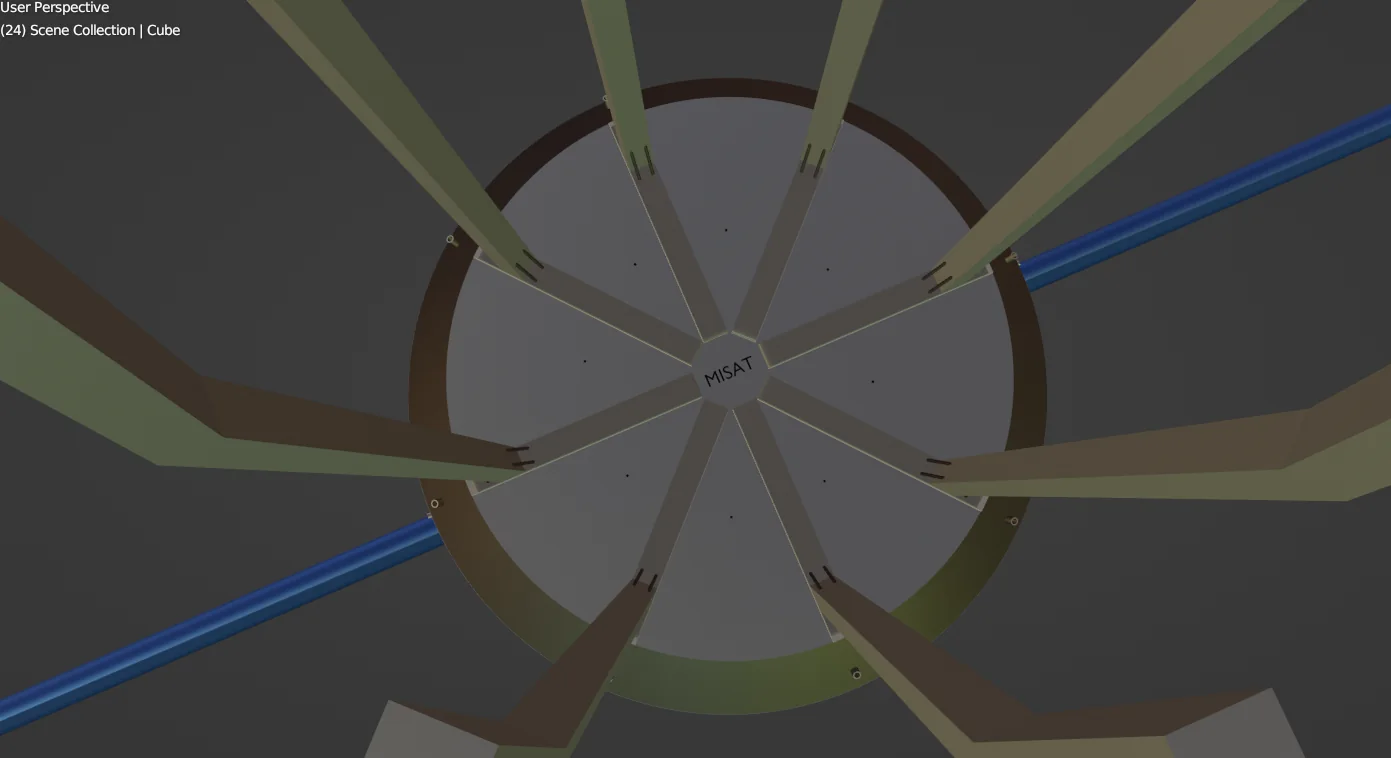
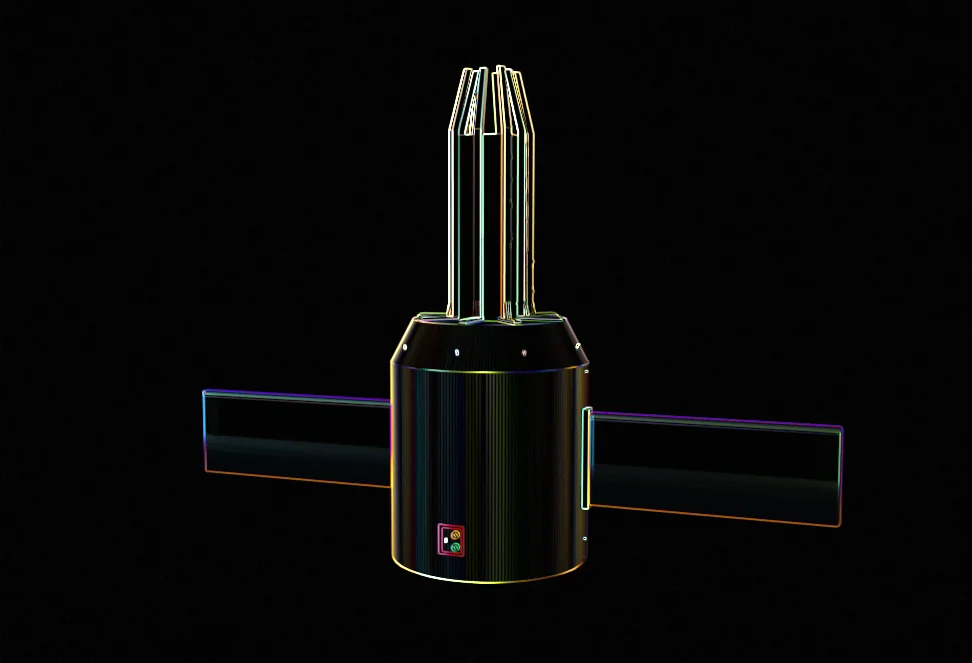
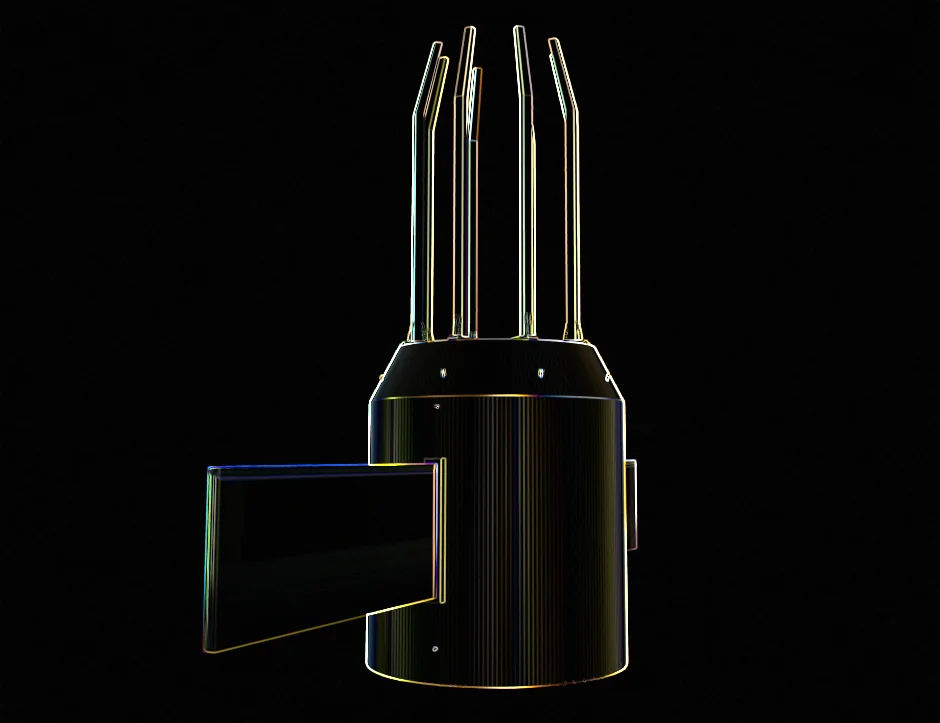
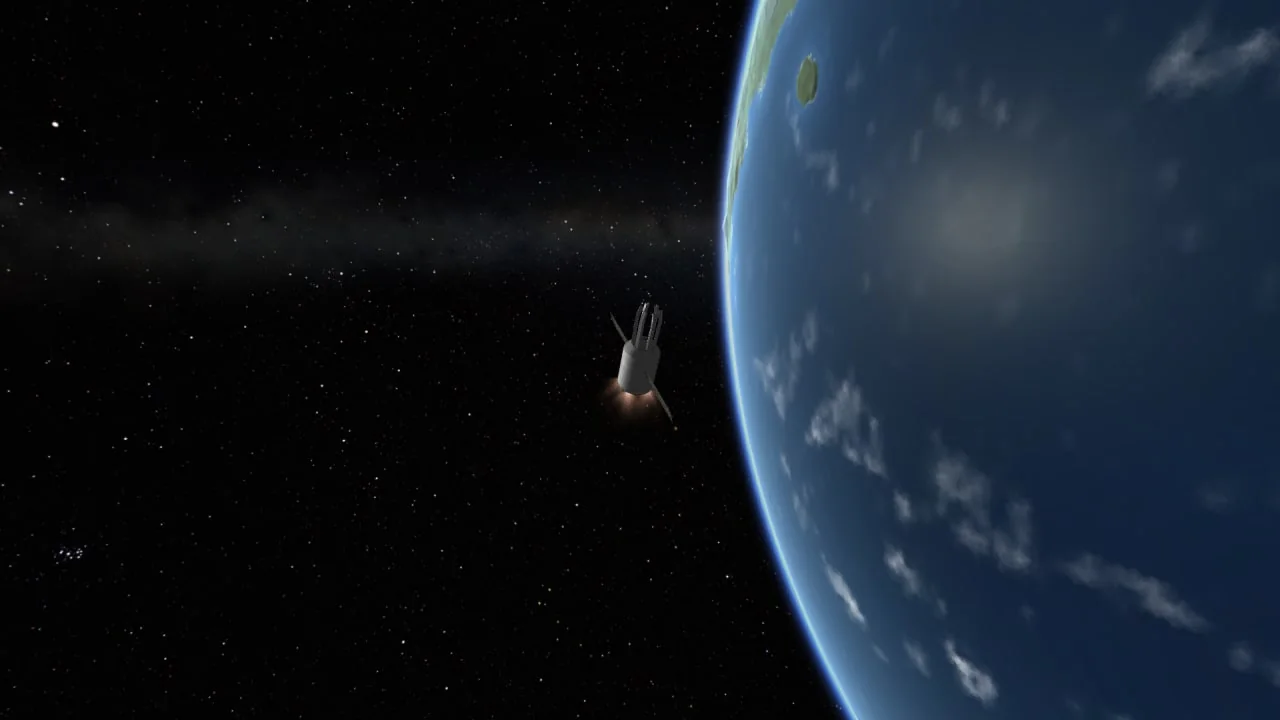
MISAT was a concept I developed in 2022 for a satellite capture and servicing spacecraft. Note: This was just a concept and development did not take place.
This spacecraft, MISAT, maneuvering using hypergolic fuels, nitrogen ACS thrusters, and reaction wheels, is capable of precisely approaching and capturing small to medium sized satellites, to then bring them to a larger ship (such as SpaceX's Starship) to be de-orbited and burned up while re-entering Earth's atmosphere, or, to bring back to Earth for repairs, or disassembly. A system like MISAT is something that should be normalized in space and part of everyday space activity.
Launch and Deployment
MISAT would either have a custom launch vehicle, or would launch atop a fully reusable rocket such as SpaceX's Starship rocket. After more and more MISATs launch and are placed into a proper orbit, the need for more MISAT launches will become increasingly unnecessary, as MISATs are able to refill their tanks in orbit by docking with a nearby MISAT refilling station. Launches would need to occur regularly to refill these stations, but other than that, it is likely that after a certain point, no new MISATs would need to be launched, unless significant hardware upgrades come about.
Reusability and Servicing
It's important to note that MISAT is not an expendable spacecraft. It will not be launched into orbit to be used once and then disposed of. The only time the operation of a specific MISAT would need to be halted is if said MISAT is damaged in some way. In that case, a servicing vehicle with special equipment will undock from a nearby refilling station to visit the damaged MISAT and perform all repairs that it can perform. If the MISAT is damaged beyond repair in space, it will be de-orbited, burning up upon atmospheric re-entry. Re-usability in space is important these days. Expendable spacecraft and launch vehicles are a thing of the past.
Propellants
MISAT utilizes hypergolic propellants for its main thrusters. Hypergolic propellants consist of a fuel and an oxidizer, which immediately combust upon contact with each other. The specific hypergolic propellant that MISAT uses is Monomethyl Hydrazine (as fuel) and Dinitrogen Tetroxide (as oxidizer). These are stored in two large tanks on the walls of MISAT, and are used for the 24 main thrusters on the vehicle. These main thrusters are primarily used to adjust the orbital velocity of MISAT to place it on a trajectory where it will intercept a non-functional satellite, when scheduled to.
Propulsion System
The main thrusters/engines are currently pressure-fed and use standard bell nozzles. For propellant atomization, in order to maximize combustion efficiency, each engine uses a like-doublet propellant injector. For those unaware, the like-doublet propellant injector is a commonly-used rocket propellant injector design with pairs of jets which, with extreme precision, shoot out liquid fuel and liquid oxidizer, at a calculated angle so that the liquids being shot out of the jets will collide with each other, producing a spray containing a combustible mixture that fans out across a wide angle in the combustion chamber. As the MISAT design evolves, the injector design may change. The Composite Overwrapped Pressure Vessels (COPVs) inside MISAT contain high-pressure nitrogen gas, used for minor attitude adjustments for carefully capturing a dead satellite, as well as for pressurizing the main propellant tanks.
Attitude Control
MISAT saves much propellant, pressurant, and nitrogen ACS gas by adjusting its attitude/orientation and rotation via internal reaction wheels powered by electricity via the solar panels rather than ACS thrusters when ideal.
Flight Computer
The computer on board this spacecraft, which controls all systems, would actively take note of any problems/difficulties it encounters while attempting to capture a satellite, so that it could send information regarding the issue to humans where they will come up with a solution, send it back to the MISAT satellite, where it will share the solution with all other MISATs in orbit. If this MISAT becomes too far away from Earth (somewhere beyond Earth or Lunar orbit) to reliably broadcast a direct signal to people on Earth or other MISATs, it will send the information through the Gbit Space Network.
Orbital Refilling
The term "refilling" is used rather than "refueling" because MISAT refills on not just fuel, but also oxidizer, which is necessary for stable combustion to take place in the near-100% vacuum of outer space. MISAT can remain in orbit, operational, for years without having to be taken back down to Earth, as it can refill its propellant tanks in orbit and receives electricity from the sun via its two large solar panels. Orbital refueling with hypergolics has already been demonstrated on various ISS (International Space Station) missions, so it should not be extremely difficult for MISAT to do the same.
Refilling Stations
Multiple MISAT stations carrying extreme amounts of hypergolic propellant, tank pressurant, and nitrogen gas for MISAT's attitude control system, would be placed in orbit so that when MISATs are beginning to run low on propellant, they can maneuver and dock to a nearby station to refill on hypergolic propellant for the main thrusters, nitrogen gas for the ACS and ullage thrusters, and helium for the main propellant tank pressurant. These large stations would be refilled by a reusable launch vehicle carrying a tanker. The tanker will dock to the refilling station, provide it with more propellant, and then return to Earth (or whichever planet it's orbiting) where it will be prepared for its next mission.